From GPU tables to the display
Bindless resources, GPU-driven meshlets, and a shared lighting architecture, on native Metal 4 and Direct3D 12 backends.
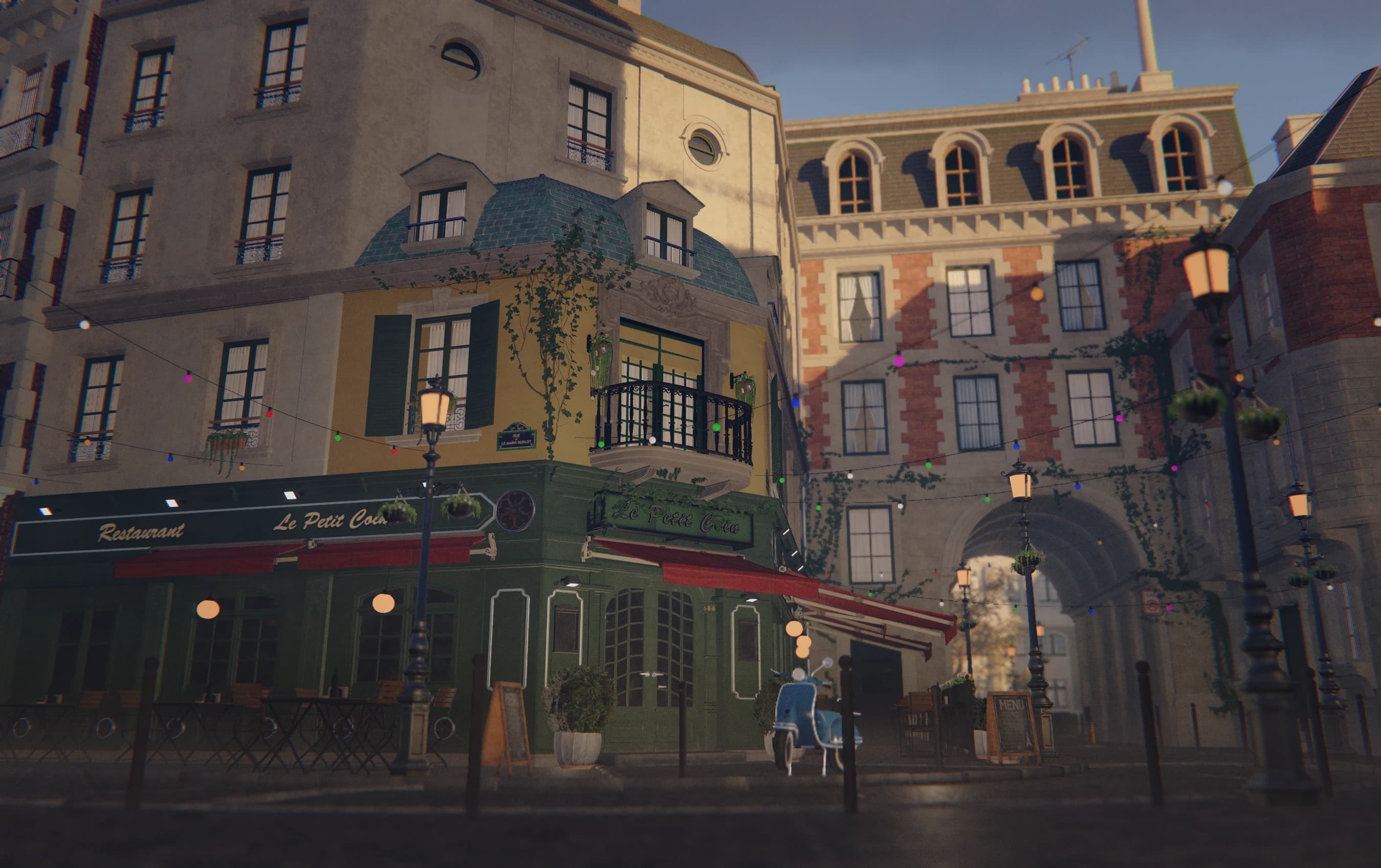
The geometry pathMain asset: Amazon Lumberyard Bistro by Amazon Lumberyard · via NVIDIA ORCA · CC BY 4.0
Culling and submission on the GPU
Scene geometry, materials, and textures live in shared GPU tables. Compute passes find visible meshlets and build indirect draw streams, keeping scene submission on the GPU.
- 01Address geometry and materials through shared tables
- 02Reject clusters outside the view, facing away, or occluded
- 03Build visible streams and indirect draw arguments
- 04Shade the surviving geometry through shared material data
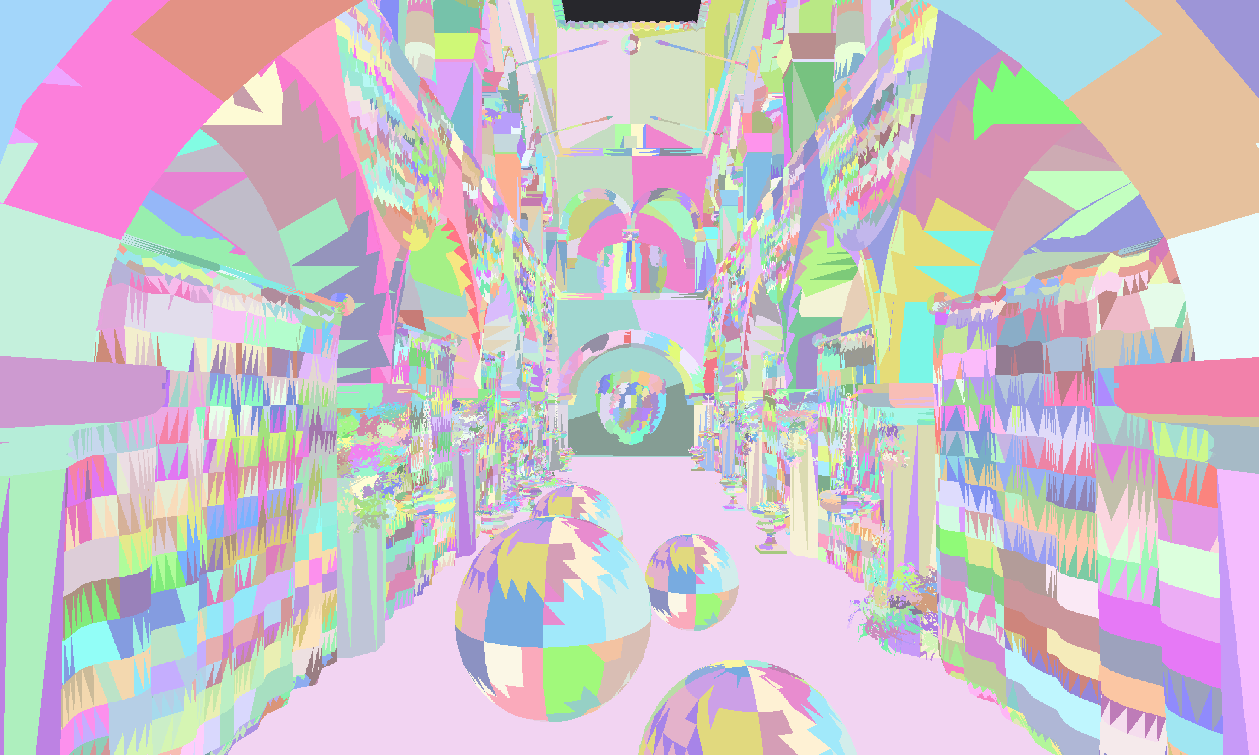
Main asset: Sponza Atrium by Frank Meinl / Crytek · License: source unverified
- Bindless resources
- Geometry, materials, and textures live in GPU tables. Shared resource indices replace per-material texture rebinding.
- GPU-driven submission
- Compute builds the visible geometry streams and indirect draw arguments. The GPU drives scene-mesh submission.
- Meshlet culling
- Meshlets bring frustum, backface-cone, and two-phase Hi-Z culling to the GPU. Shadows use the same geometry-pulling architecture.
- Ray tracing
- Ray-traced shadows, ambient occlusion, reflections, and global illumination share the renderer’s material and geometry data.
- Screen-space effects
- SSAO, SSGI, and hierarchical screen-space reflections add contact, bounce light, and surface detail, with configurable quality budgets.
- Froxel volumetrics
- Froxel volumetrics integrate light through fog and bounded media. Shape shafts, local smoke, and atmosphere with volume materials.
Stylized scenes, same renderer
Saturated colour, warm light, and soft haze. A stylized Japanese street, rendered by the same pipeline as the Bistro captures.
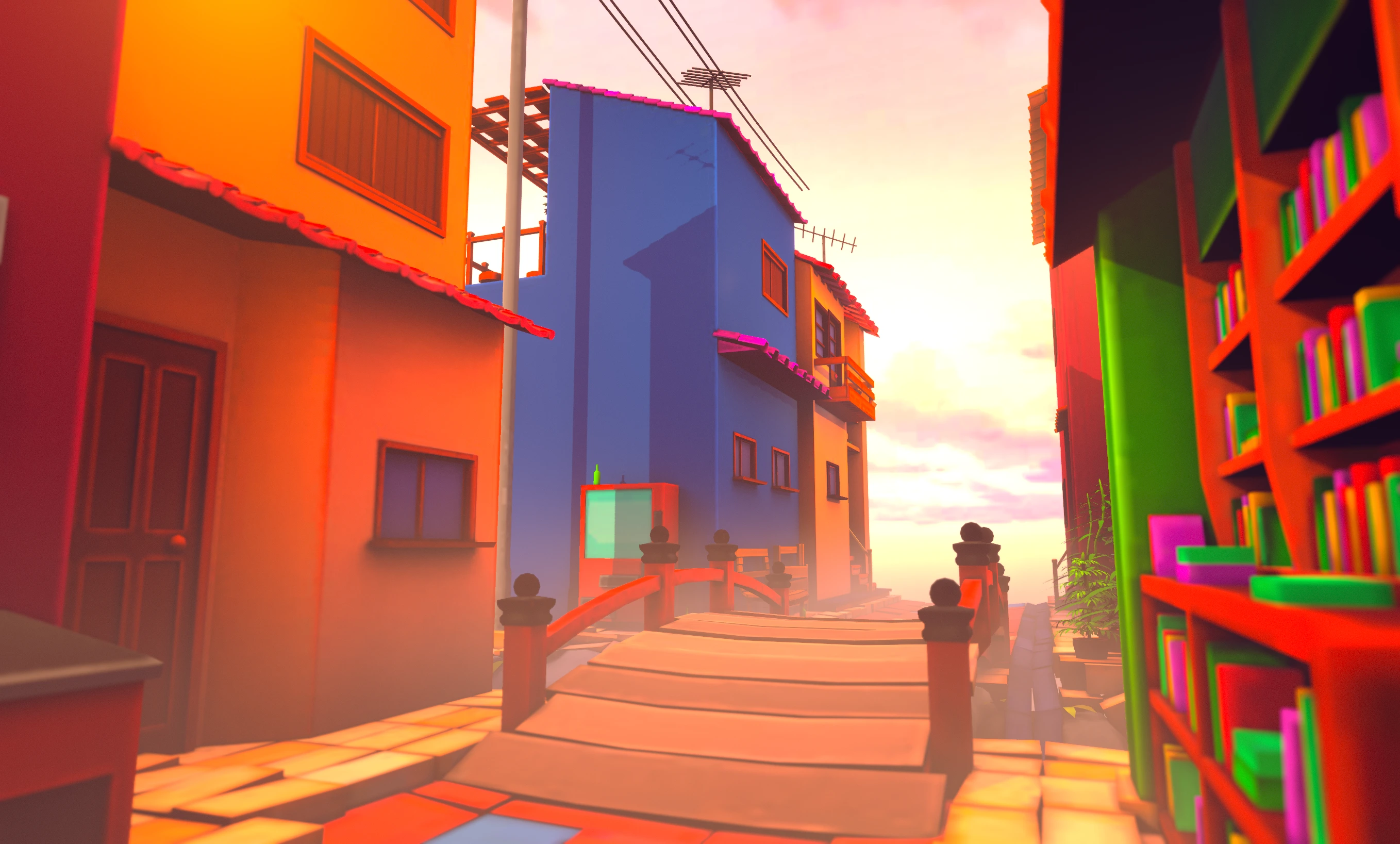
Main asset: Stylized Little Japanese Town Street by Michał Solarek · CC Attribution
Light that fills the air
Froxels divide the camera’s view into a 3D grid. The renderer injects lighting and integrates scattering through global fog and bounded local volumes. Volume materials shape the medium; scene shadow maps give the haze structure.
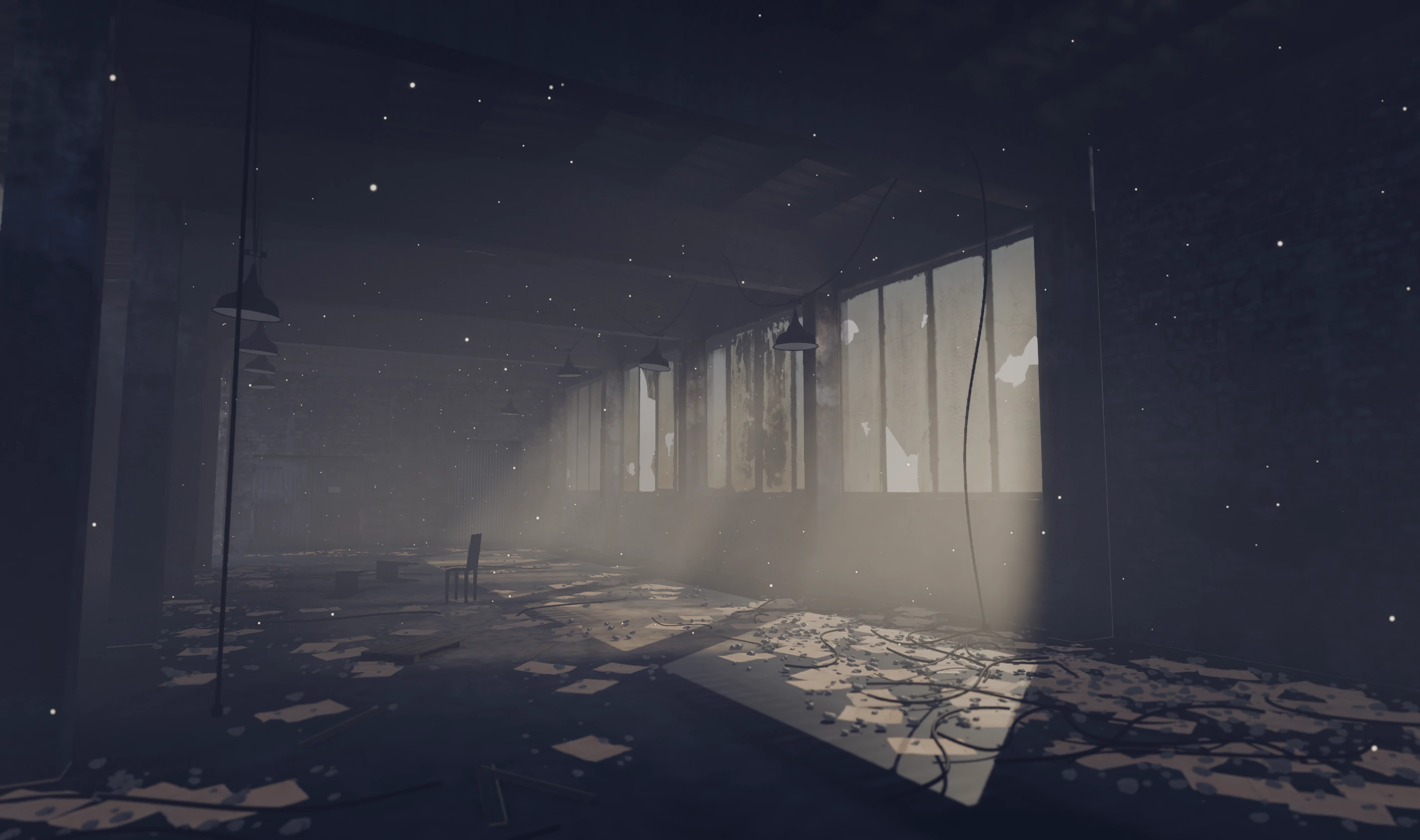
Main asset: Abandoned Warehouse - Interior Scene by Aurélien Martel · CC Attribution
HDR output that follows the display
Scene colour stays linear and unbounded through exposure, bloom, and grading. Display mapping then resolves the image against the screen’s peak brightness and paper white. Hikari selects the output encoding for the active surface.
Automatic SDR fallback when HDR is unavailable. Web captures are SDR previews.
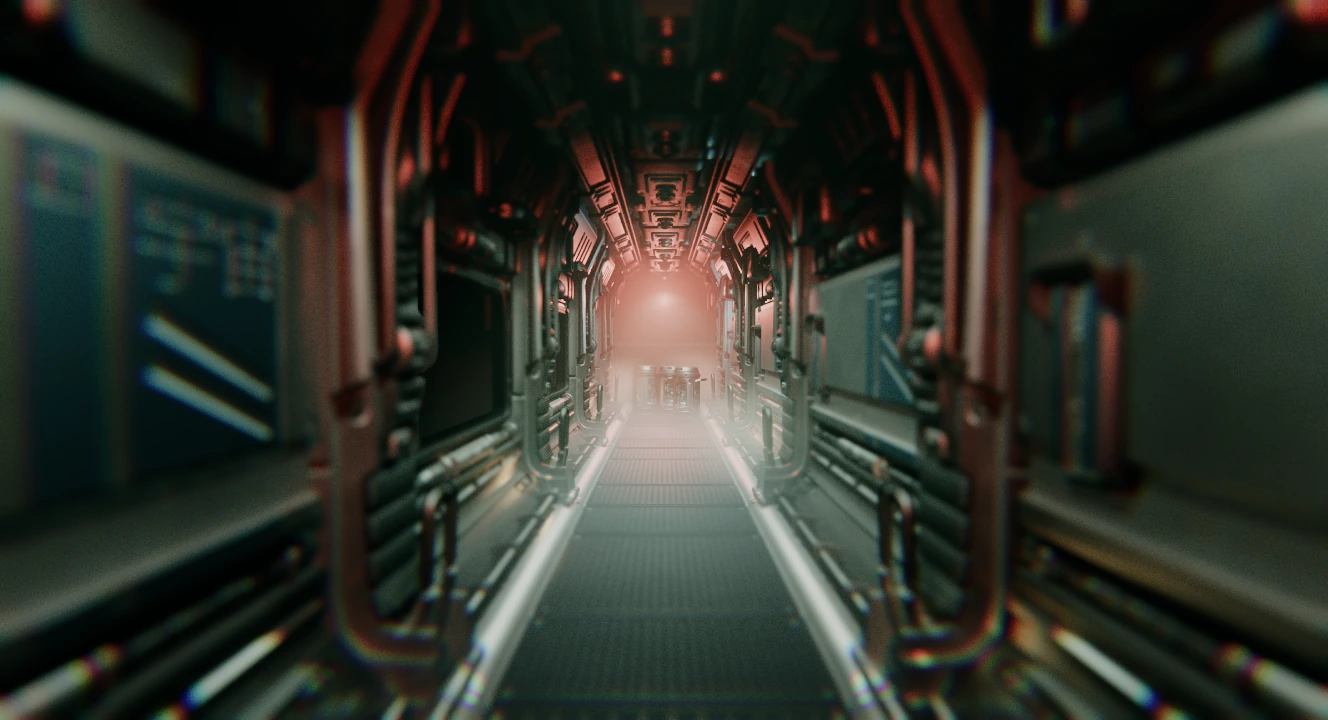
Main asset: Spaceship Corridor by the_table · CC Attribution
- Peak-aware tone mapping
- Display-aware tone mapping and BT.2390 roll-off fit highlights to the screen’s current peak brightness.
- Paper-white reference
- UI and diffuse white share a configurable brightness reference, independent of HDR highlights.
- Automatic HDR and SDR
- Detects OS-enabled HDR, falls back to SDR, and switches live without restarting the engine.