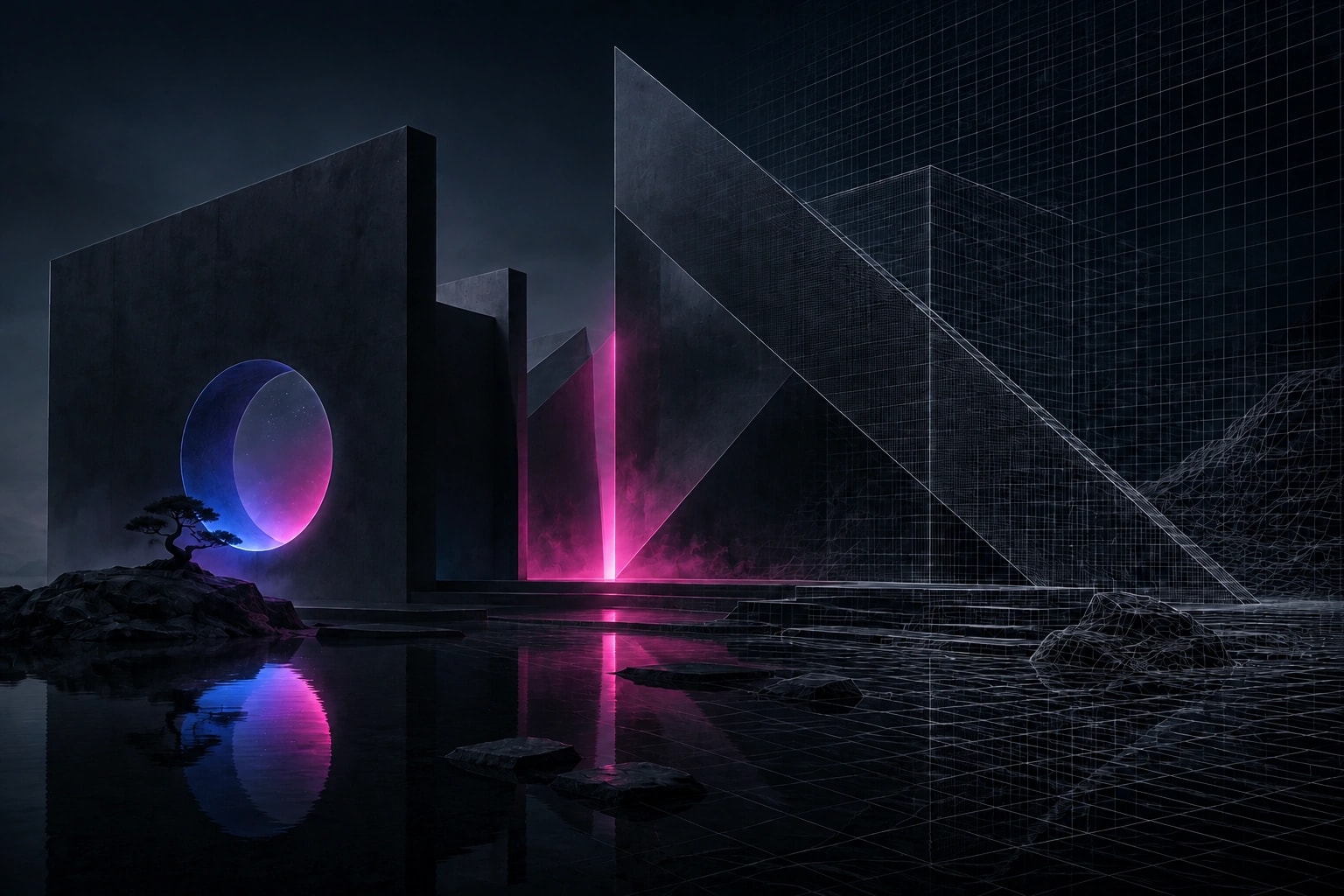
Hikari Engine · In development
Bring worldsto light.
A native engine for ambitious worlds. Built in Zig, with modern rendering and every tool within reach.
Native at the core.
A Zig runtime with explicit memory ownership and a dedicated render thread.
Built for modern GPUs.
GPU-driven geometry with native Metal 4 and Direct3D 12 backends.
Keep your ideas moving.
Edit scenes, test in Play, and recompile game code without restarting the editor.
The GPU takes the lead.
Bindless resources. GPU-driven meshlets. Ray tracing, screen-space effects, and froxel volumetrics, built to work together.
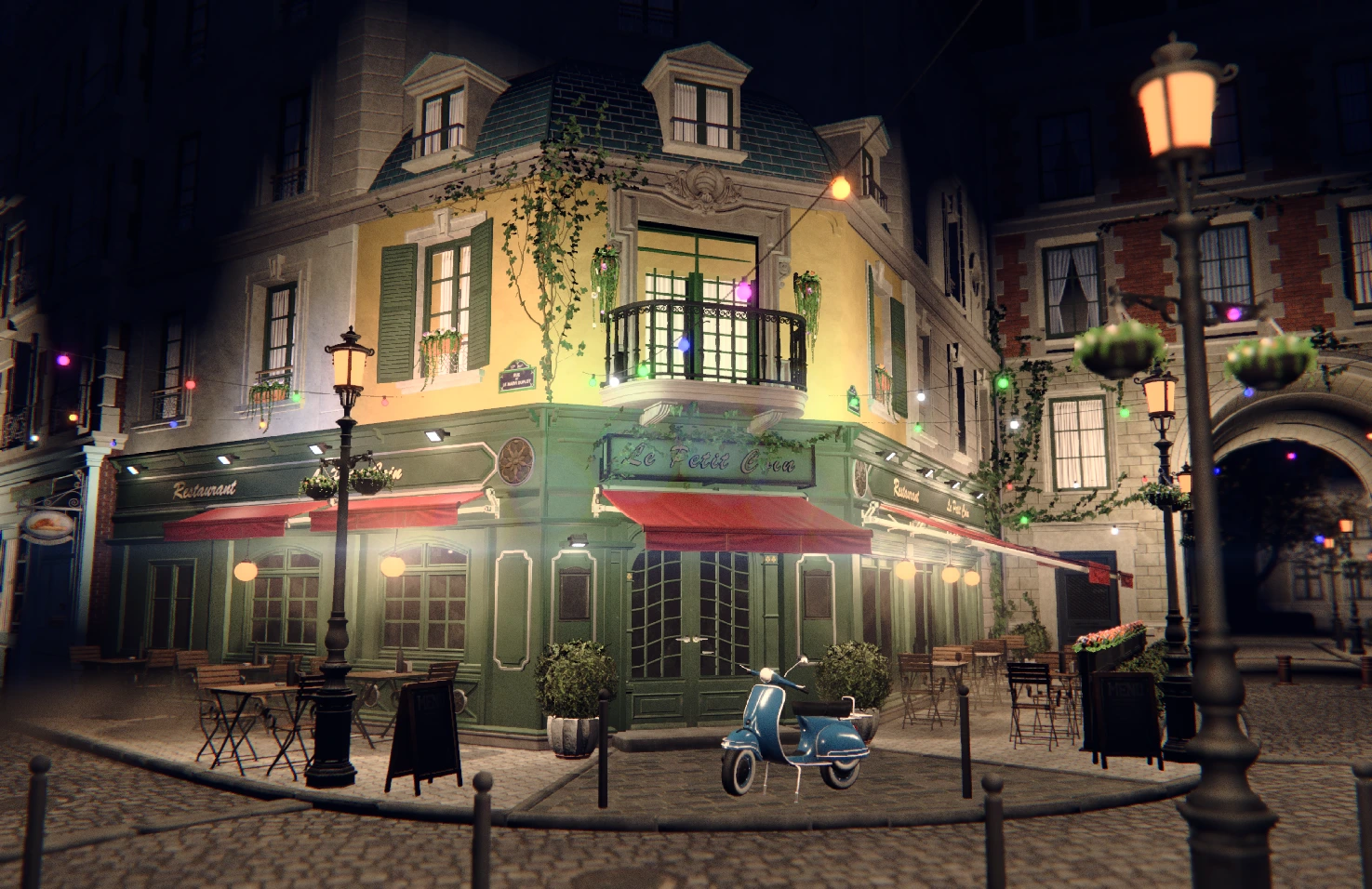
Main asset: Amazon Lumberyard Bistro by Amazon Lumberyard · via NVIDIA ORCA · CC BY 4.0
Bindless by design.
Geometry, materials, and textures live in GPU tables. Shared resource indices replace per-material texture rebinding.
GPU-driven submission.
Compute builds the visible geometry streams and indirect draw arguments. The GPU drives scene-mesh submission.
Small clusters. Less work.
Meshlets bring frustum, backface-cone, and two-phase Hi-Z culling to the GPU. Shadows use the same geometry-pulling architecture.
Ray tracing, integrated.
Ray-traced shadows, ambient occlusion, reflections, and global illumination share the renderer’s material and geometry data.
Screen space, fully used.
SSAO, SSGI, and hierarchical screen-space reflections add contact, bounce light, and surface detail, with configurable quality budgets.
Light with volume.
Froxel volumetrics integrate light through fog and bounded media. Shape shafts, local smoke, and atmosphere with volume materials.
Inside the frame.
Meshlets
Colour-coded geometry reveals the clusters the GPU works with.
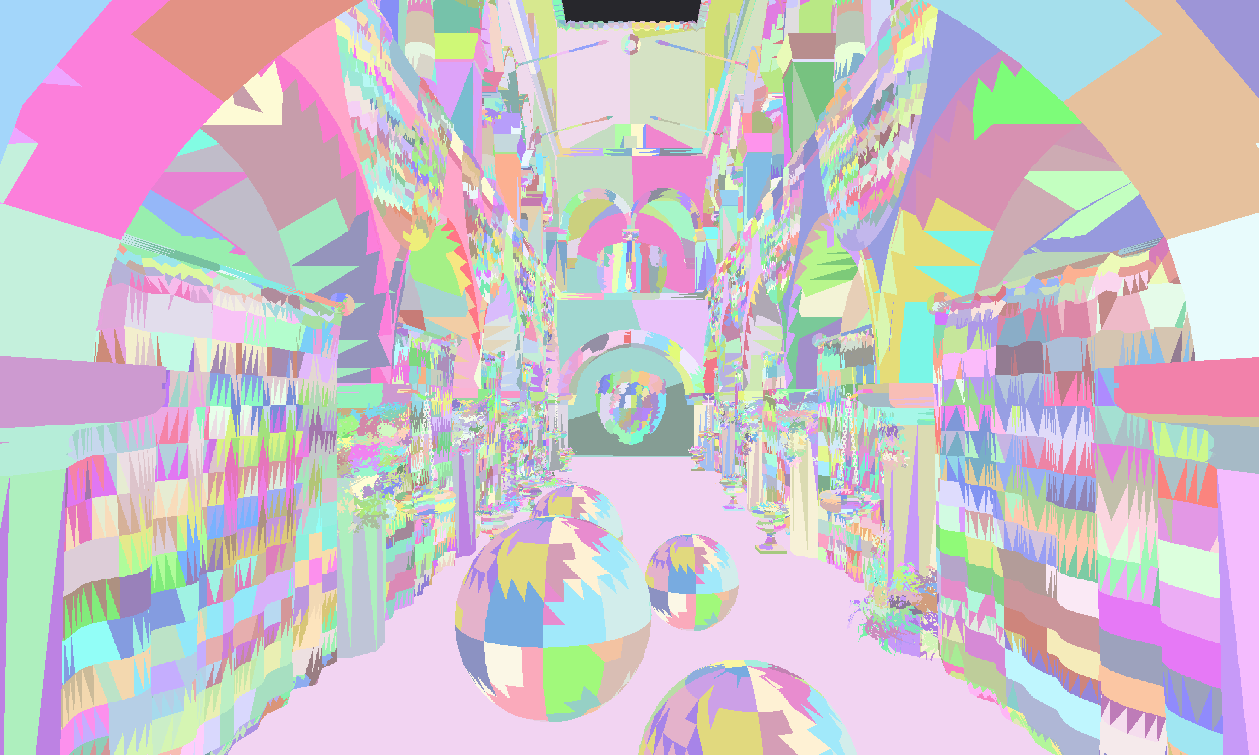
Main asset: Sponza Atrium by Frank Meinl / Crytek · License: source unverified
Render buffers
Inspect surface colour, normals, depth, and the layers behind the final image.
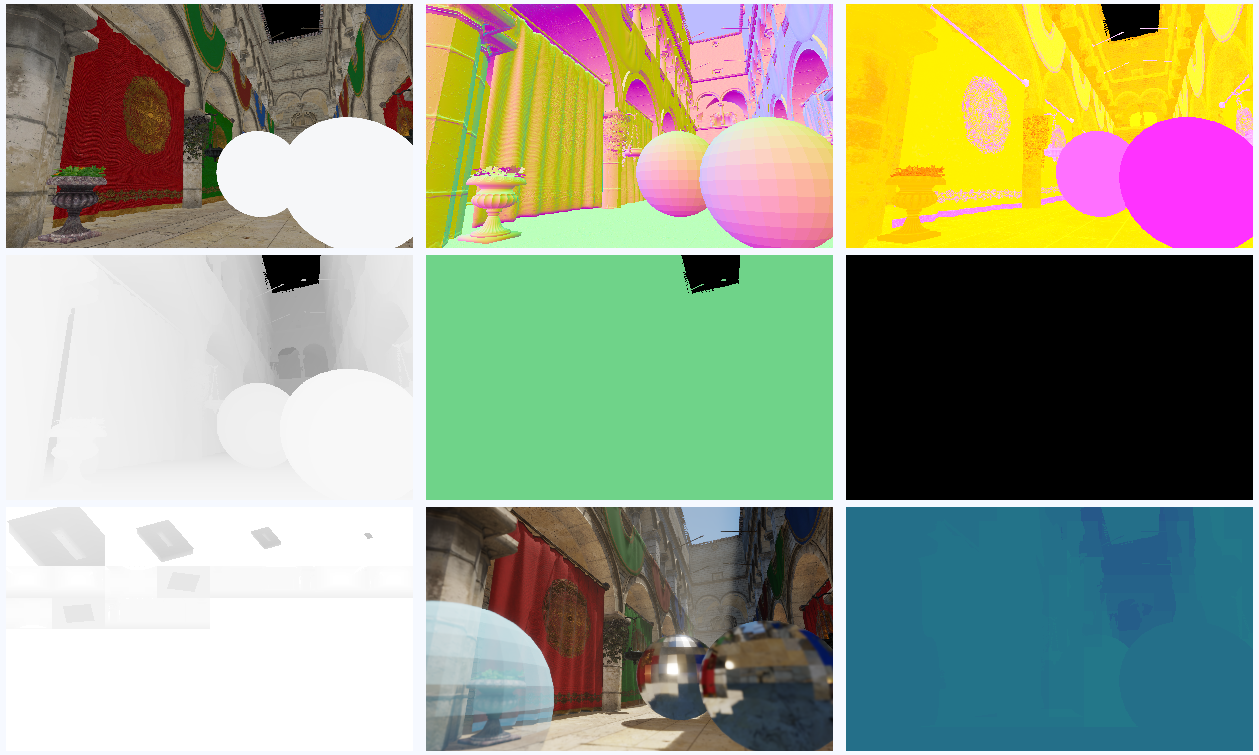
Main asset: Sponza Atrium by Frank Meinl / Crytek · License: source unverified
One shared rendering architecture. Native Metal 4 and Direct3D 12 backends.
Inside the rendererA world with its own colour.
Saturated colour, warm light, and soft haze. A stylized Japanese street captured in Hikari, showing another side of the renderer.
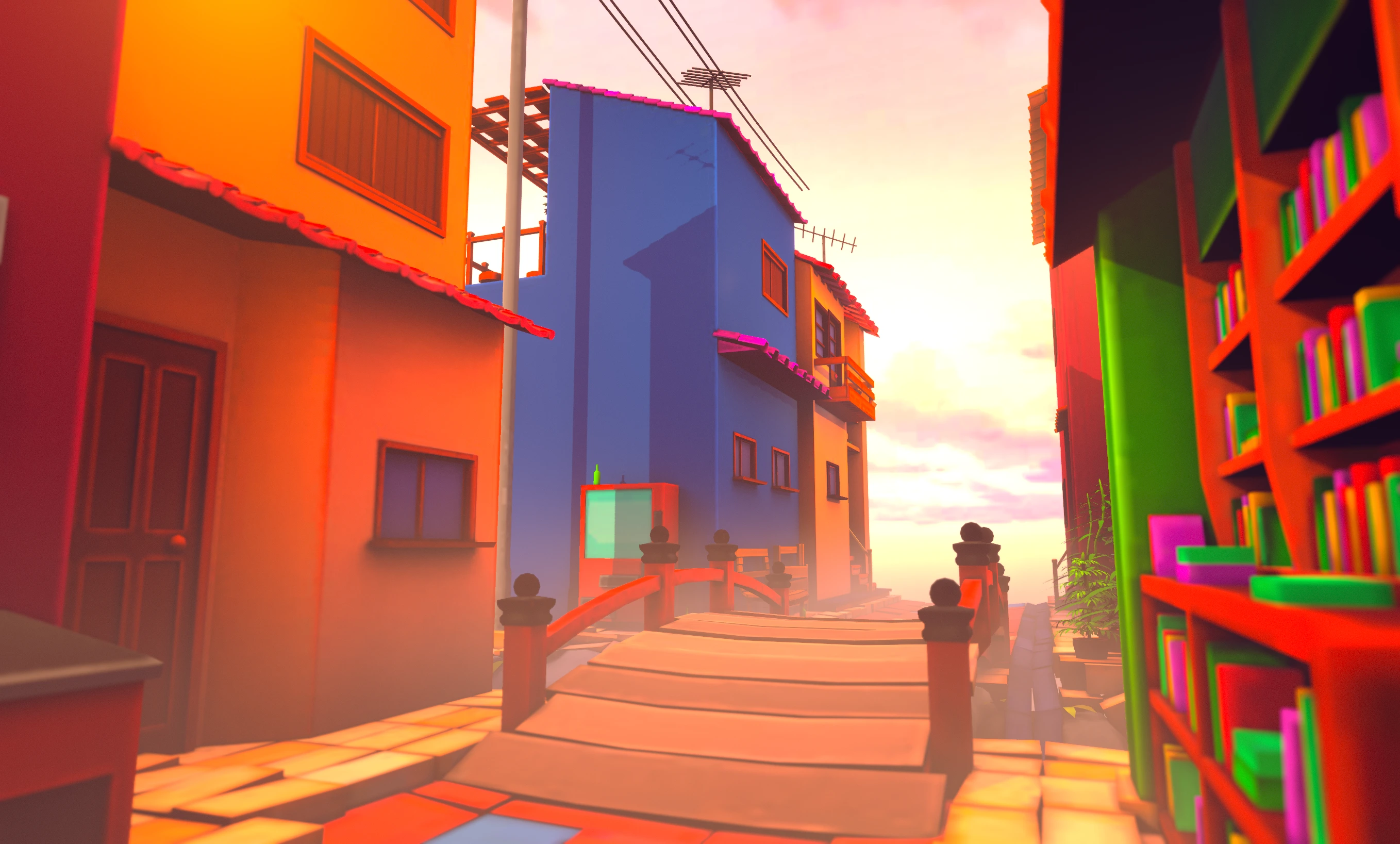
Main asset: Stylized Little Japanese Town Street by Michał Solarek · CC Attribution
Give light a presence.
Light moves through the scene, not just across its surfaces. Froxel volumetrics bring depth to fog, colour to haze, and shadows into the air.
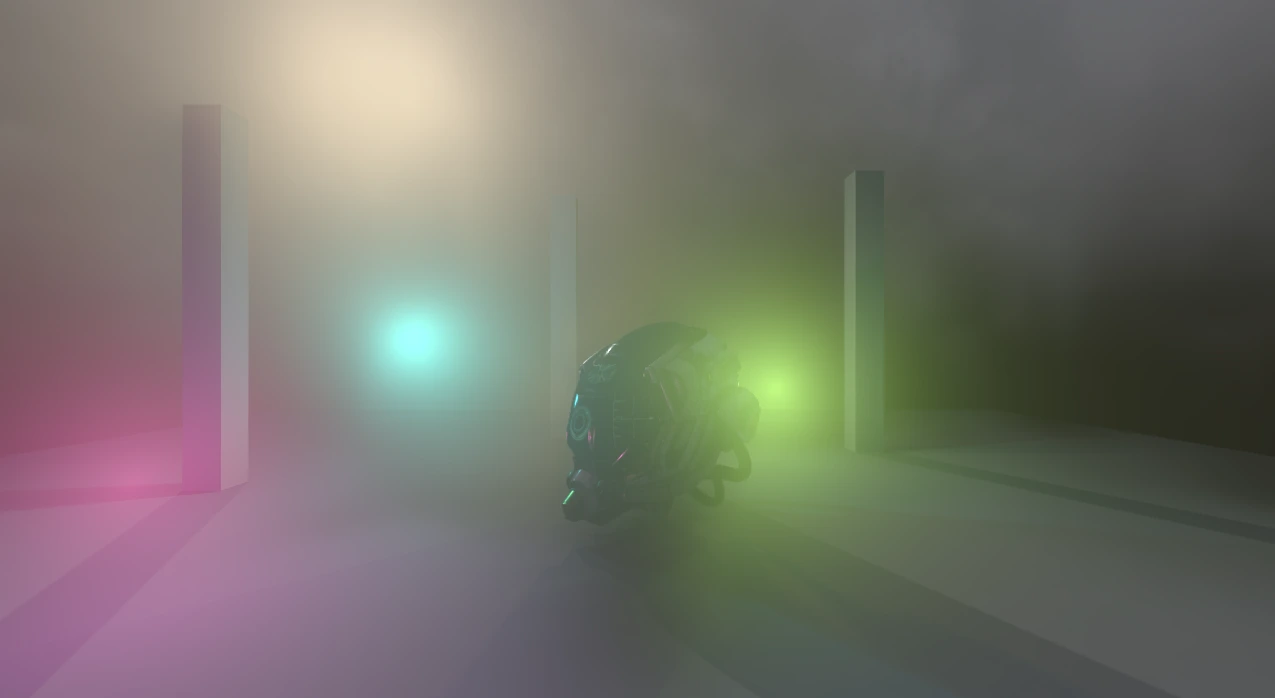
A volume, not an overlay.
A camera-aligned froxel grid integrates light through fog and local volumes.
Shadows through the haze.
Scene lights and shadow maps shape scattering, shafts, and depth.
Shape the atmosphere.
Combine global fog with bounded volumes and graph-authored volume materials.
Beyond ordinary white.
A linear-light pipeline from scene to screen. Hikari adapts HDR output to the display, keeping bright highlights expressive and everyday UI comfortable.
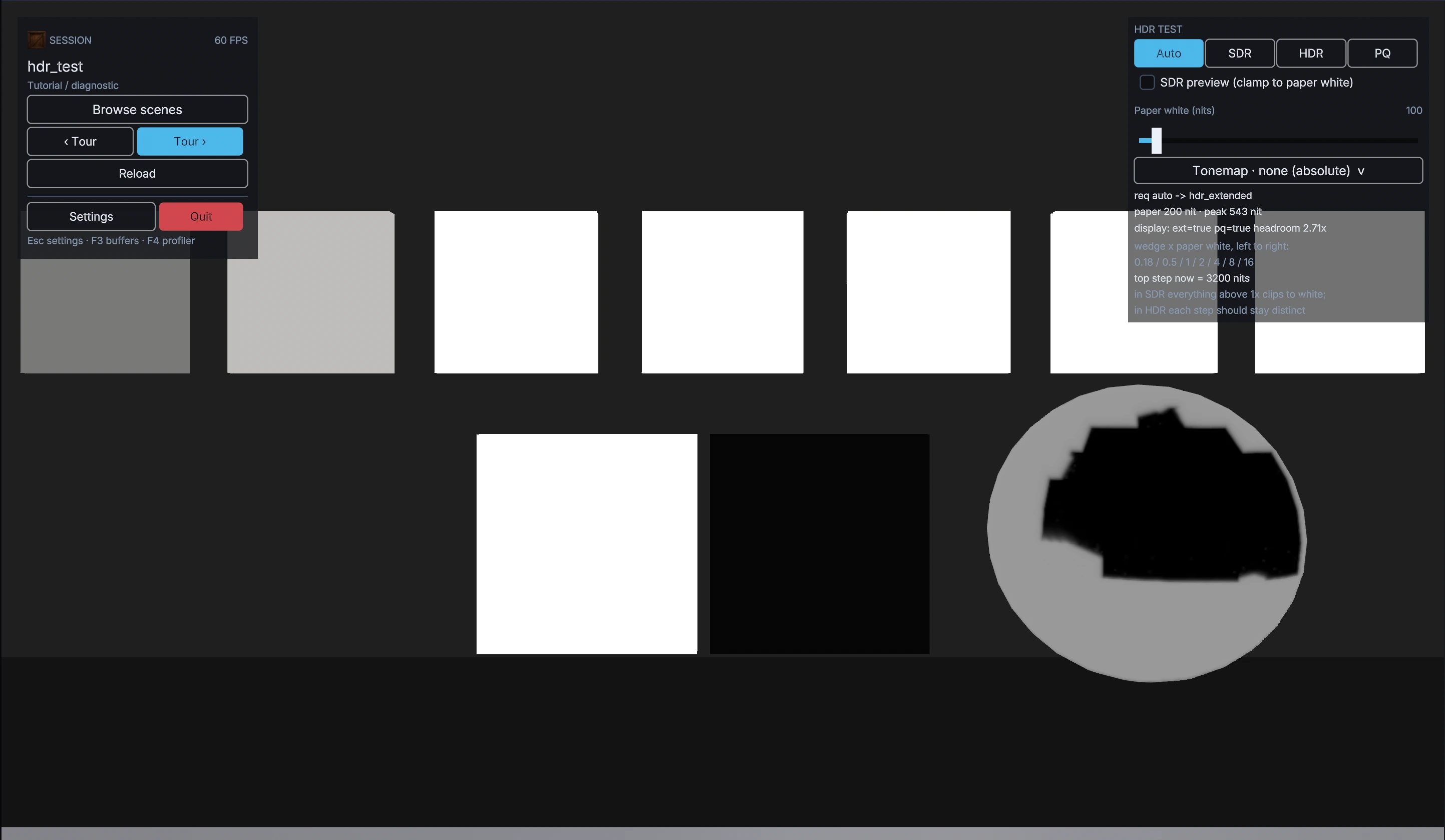
- Highlights with headroom.
- Display-aware tone mapping and BT.2390 roll-off fit highlights to the screen’s current peak brightness.
- A comfortable paper white.
- UI and diffuse white share a configurable brightness reference, independent of HDR highlights.
- The right output, automatically.
- Detects OS-enabled HDR, falls back to SDR, and switches live without restarting the engine.
Make. Play. Make it yours.
Scene authoring and the live runtime, together. A direct path from an idea to something you can play.
Build the scene.
Arrange actors, tune components, and work with prefabs. Undo and redo keep your edits reversible.
Press Play. Try it out.
Run the game in a separate Play world. Stop returns you to your authored scene.
Refine. Recompile. Repeat.
Rebuild game logic in Edit mode while the scene stays open. Asset watching brings changed content back into the editor.
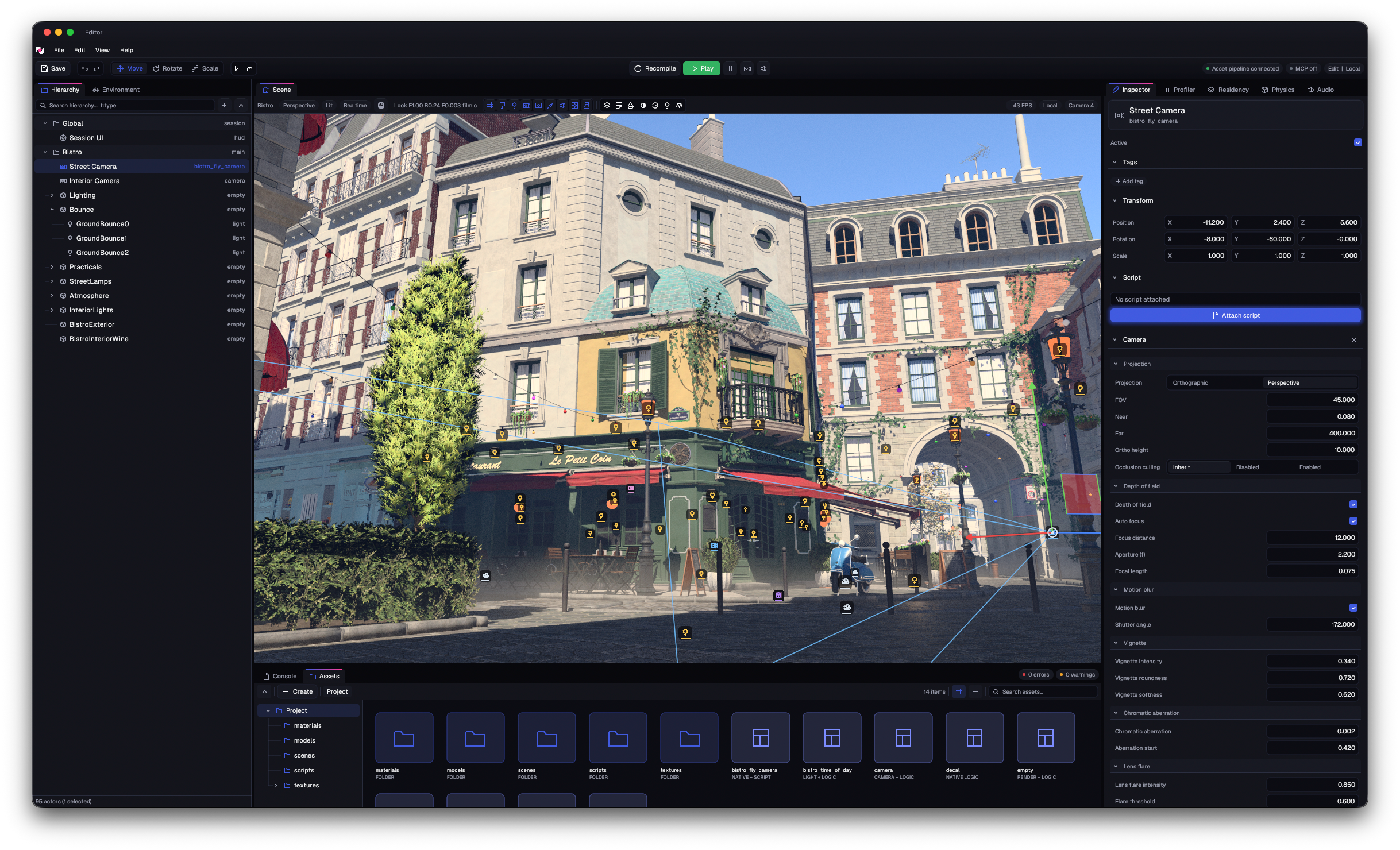
Main asset: Amazon Lumberyard Bistro by Amazon Lumberyard · via NVIDIA ORCA · CC BY 4.0
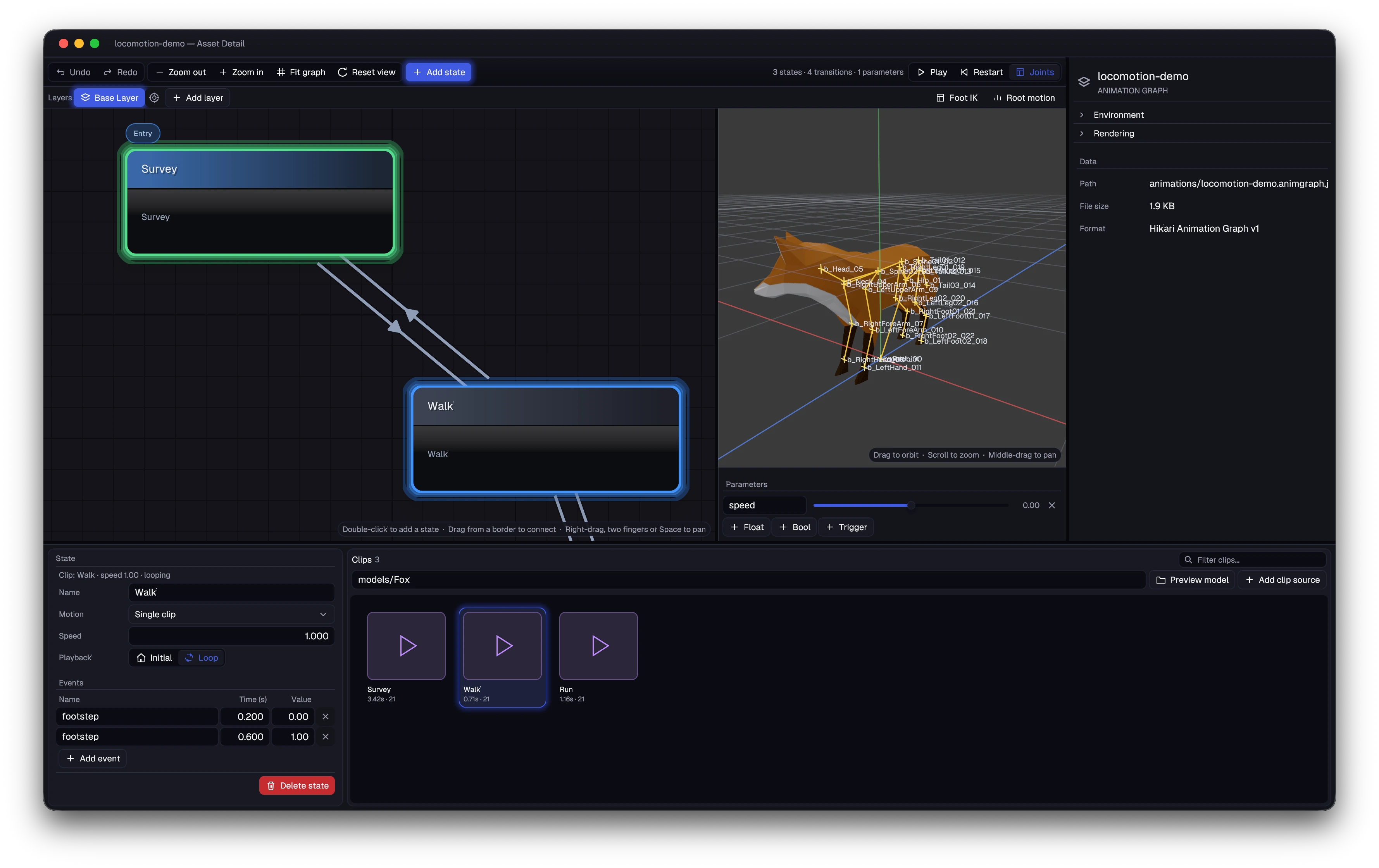
Material, animation, and particle tools · Profiling · Extensible panels · Local MCP integration
Give motion a flow.
Shape the surface. See it live.
Build materials as graphs, inspect them in the live preview, and author custom shaders in Akari for Metal and Direct3D.
Explore shader authoring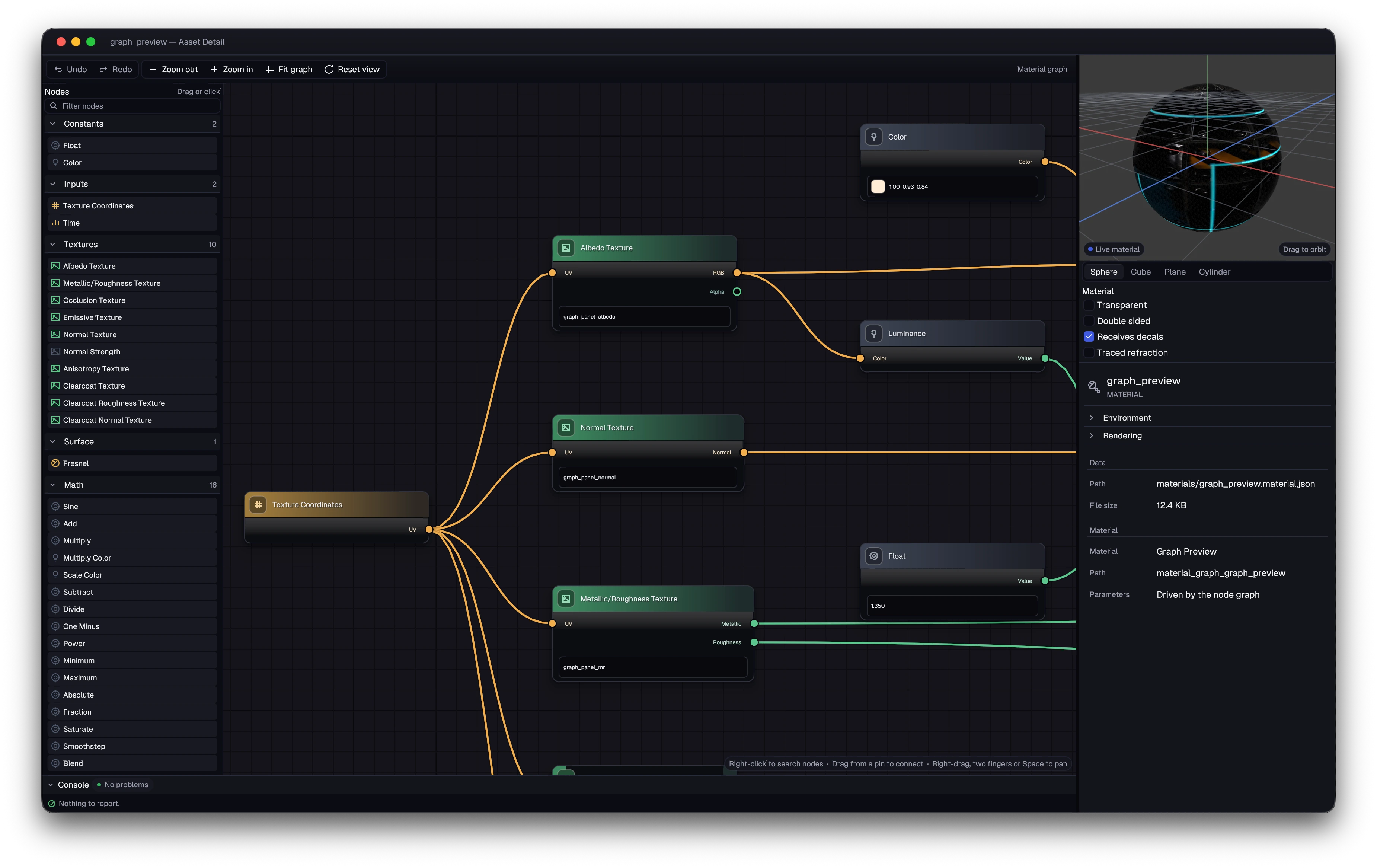
AI-native. By design.
Connect your AI agent directly to the live editor. Hikari’s comprehensive Model Context Protocol interface gives it the context and tools to understand, build, and refine your world.
Your AI agentMCPHikari Editor
Explore the MCP interface- Scenes, with understanding.
- Inspect actors and component schemas. Create scenes, edit prefabs, and apply coordinated changes.
- A complete authoring workflow.
- Create and import assets. Author materials, animation graphs, and particle systems through structured tools.
- Beyond the viewport.
- Work with project settings, plugins, gameplay tags, and asset import options.
- See what changed.
- Position the camera, frame a subject, capture the rendered viewport, and inspect console output.
One editor. Shared rules. Agent edits use native validation, conflict checks, and undoable scene operations. Activity is recorded in the project audit log.
Enable MCP in Editor Settings and copy the connection configuration to your agent. Local access, authenticated per project.
A whole engine. In good company.
From source assets to a playable build, each part has a clear job. Kaji brings it all together.
Hikari
ZigNative runtime, rendering, and editor.
Shinra
RustAsset cooking, watching, and packaging.
Akari
RustShader language targeting Metal and Direct3D.
Kawa
CEmbedded scripting for game logic.
Tenkai3D
Odin3D physics and character controllers.
Kaji
C# / .NETOne build flow for games and the editor.
Compose an actor from the capabilities it needs.
const hi = @import("hikari_game");

pub const BeaconEntity = hi.defineEntity(.{
    .archetype = "beacon",
    .components = .{ hi.ComponentRender, hi.ComponentLight },
});Look under the hood.
Hikari is in active development for macOS and Windows. Explore the systems, tools, and ideas behind it.